People & leadership · Wellbeing · Operations & design / Essay
The last hour of a hotel shift
At 25hours Hotels, four hours of the working week went into a reserve. At Raffles Singapore, section heads could change the night rota. Who controls the clock may matter more to a hotel team than an extra staff benefit.
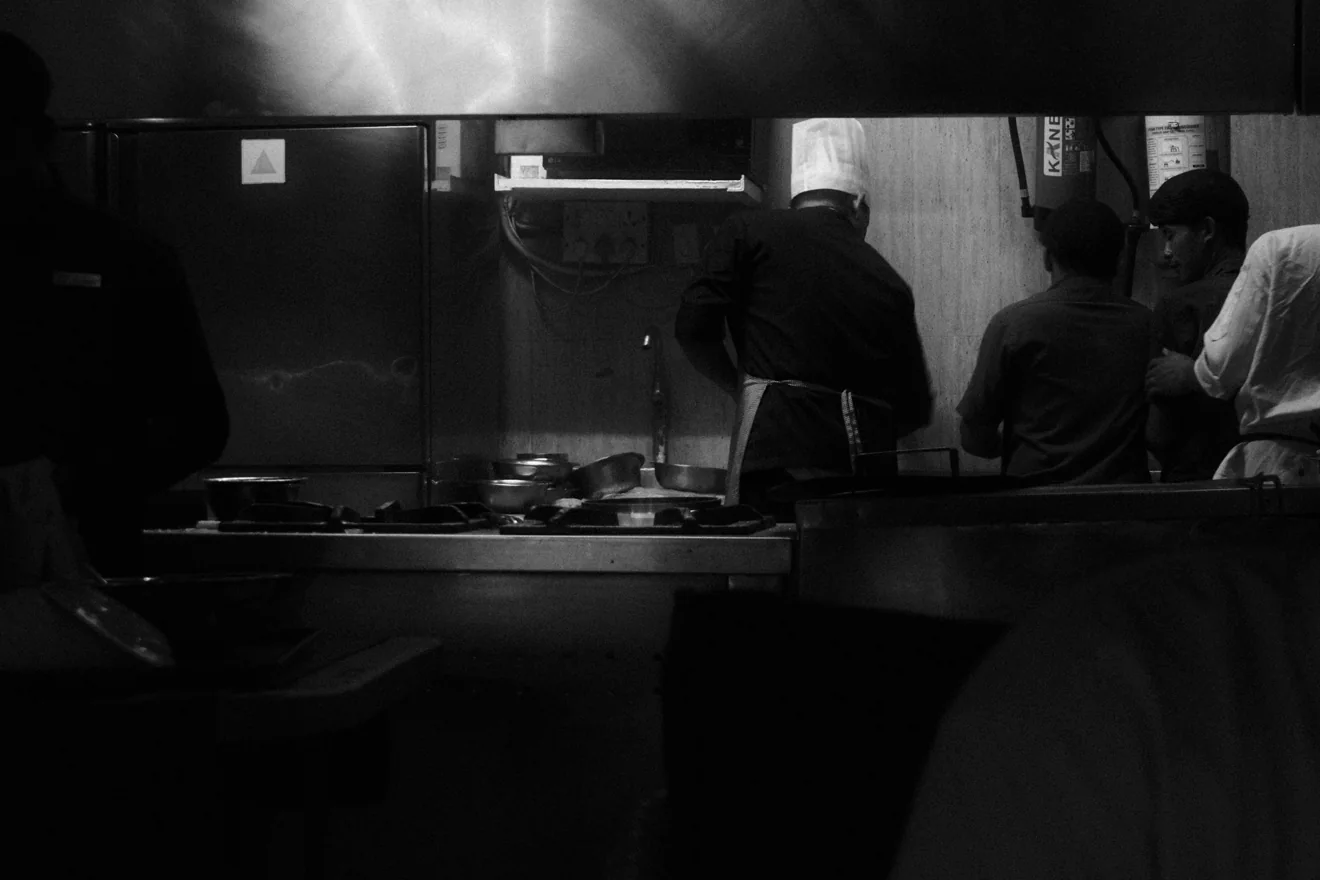
When 25hours Hotels offered a four-day week at eleven hotels in Germany, Austria and Switzerland, the interesting detail was what happened to the fortieth hour. Four shifts of nine hours came to 36. Staff who chose the arrangement kept their full salary. The remaining four hours went into a reserve that could absorb a late finish, including the entirely foreseeable surprise of a restaurant guest lingering over dinner. The employee could count on three days off. The guest could finish the wine.
A hotel that sells the luxury of taking your time has to decide whose time it can give away. Usually the answer emerges towards the end of a shift, in a conversation between a supervisor who needs cover and a colleague who has already put their coat on. The appeal of the 25hours experiment was that some of this bargaining happened in advance. In Ennismore’s 2023 account, Kathrin Gollubits, the executive who led the change, described the work it took to redraw rosters and increase staffing. Someone put money behind the promise. She reported strong take-up. The account supplied no comparison of guest satisfaction or profit across equivalent hotels, so those outcomes remain open questions.
Singapore’s Raffles Hotel reached a different settlement with the clock. A case study published by the Tripartite Alliance for Fair and Progressive Employment Practices in 2022 described an arrangement that began in 2019. Staff with primary caring responsibilities could request fewer nights or weekends. Section heads could approve changes if they could cover the shift. The option extended to operational shift workers, then about 85% of the workforce. That percentage describes eligibility. It tells us nothing about how many requests succeeded. The consequential detail was who could say yes. A supervisor close enough to know the team could commit the hotel to a decision.
A director of rooms reading the two accounts might reasonably prefer five shorter days. Nine hours on your feet can be a long stretch. A colleague who relies on a particular last bus may value a dependable finishing time more than a third day off. Someone saving for a deposit may actively want the late shifts and the money they bring. An executive who asks employees whether they want flexibility can collect three emphatic yeses to three different propositions. Asking which part of the week people need to be able to count on will produce a more useful answer.
Two promises for the same room
The timing matters as hoteliers buy software to write better rosters. On 4 November the American Hotel & Lodging Association and Actabl, a hospitality software company, published a workforce report. They cited an industry survey in which 84% of respondents said AI had improved their own work, while 15% said it had improved work on the front line. Those were respondents’ assessments. The second figure does not tell us what proportion of housekeepers felt a benefit. It does warrant asking where the time saved at a manager’s desk actually went.
Consider a sales team that grants a wedding party late checkout on Sunday while continuing to sell early arrival to the next guests. Both promises can be commercially sound. Together they shrink the interval in which an attendant can prepare a room. A forecast could flag the collision on Thursday, when a manager still has choices. The hotel could bring in agreed cover, stagger the arrivals or limit one of the offers. Waiting until Sunday leaves a narrower choice. Someone must hurry, someone must stay or a guest must wait. The financial benefit of selling the two privileges sits in plain view. The cost is easy to miss when it appears as a few extra minutes across several shifts.
There is a reason to ask about those minutes before buying another wellbeing benefit. In February 2025 SHRM surveyed 1,193 US workers. Its published findings put the share who often or always felt stressed because of their job at 31%. The survey covered occupations across the economy. A hotel cannot read its own team’s working conditions off that figure. It can give a housekeeper and a banquet captain the same practical question in private. When the plan changes after your shift starts, what happens to your journey home? An answer about the price of a taxi is also evidence about the hotel’s operating costs. At present the employee may be the one paying.
The economics look different again outside a city. Service and Creative Skills Australia’s workforce update this November found that recruitment pressure had eased from its pandemic peak, while shortages persisted for skilled cooks and chefs. Regional employers cited housing and transport among the obstacles to attracting experienced workers. A resort facing those constraints has very little use for a roster that assumes a qualified replacement can be summoned at two hours’ notice. An owner deciding between an extra scheduled cook and a narrower Sunday menu has a real choice to price. Calling the usual cook on their day off indefinitely disguises the cost of keeping both options on the table.
The roster nobody keeps
A general manager could learn quite a lot by keeping two copies of next month’s roster. Save the one employees first received, then compare it with the hours actually worked. Ask who initiated each substantial change. A swap two colleagues chose belongs in a different column from a closing shift the hotel extended. Set the pattern beside late room releases, agency bills and guest complaints. Invite the people who covered the busiest service to explain the exceptions. Averages will miss the colleague who rescued four successive Sundays and has quietly started to consider a job elsewhere.
The most revealing decision may come at the next revenue meeting. Before approving a late-checkout offer, ask housekeeping which hours are available, what extra cover would cost and what colleagues have already been promised. Give the executive housekeeper authority to change the offer when those limits are reached. A guest can still buy a leisurely Sunday. The hotel will finally know what it costs to sell one.
Sources
- How 25hours Hotels is changing the way we work · Ennismore ·
- Flexibility as a Key Talent Strategy: Raffles Hotel Singapore · Tripartite Alliance for Fair and Progressive Employment Practices ·
- AI and the Hotel Workforce: How Technology Is Supporting People and Improving Hotel Operations · American Hotel & Lodging Association and Actabl ·
- SHRM 2025 Insights: Workplace Mental Health · SHRM ·
- Tourism, Travel and Hospitality Workforce Planning Update 2026 · Service and Creative Skills Australia ·