Assets & development · Wellbeing · Commercial strategy / Feature
The spa on two balance sheets
A palazzo in Rome, a Saudi island retreat and the accounts of 297 American hotels show why a spa’s value can turn up in a room rate, a management contract or the next conference bid.
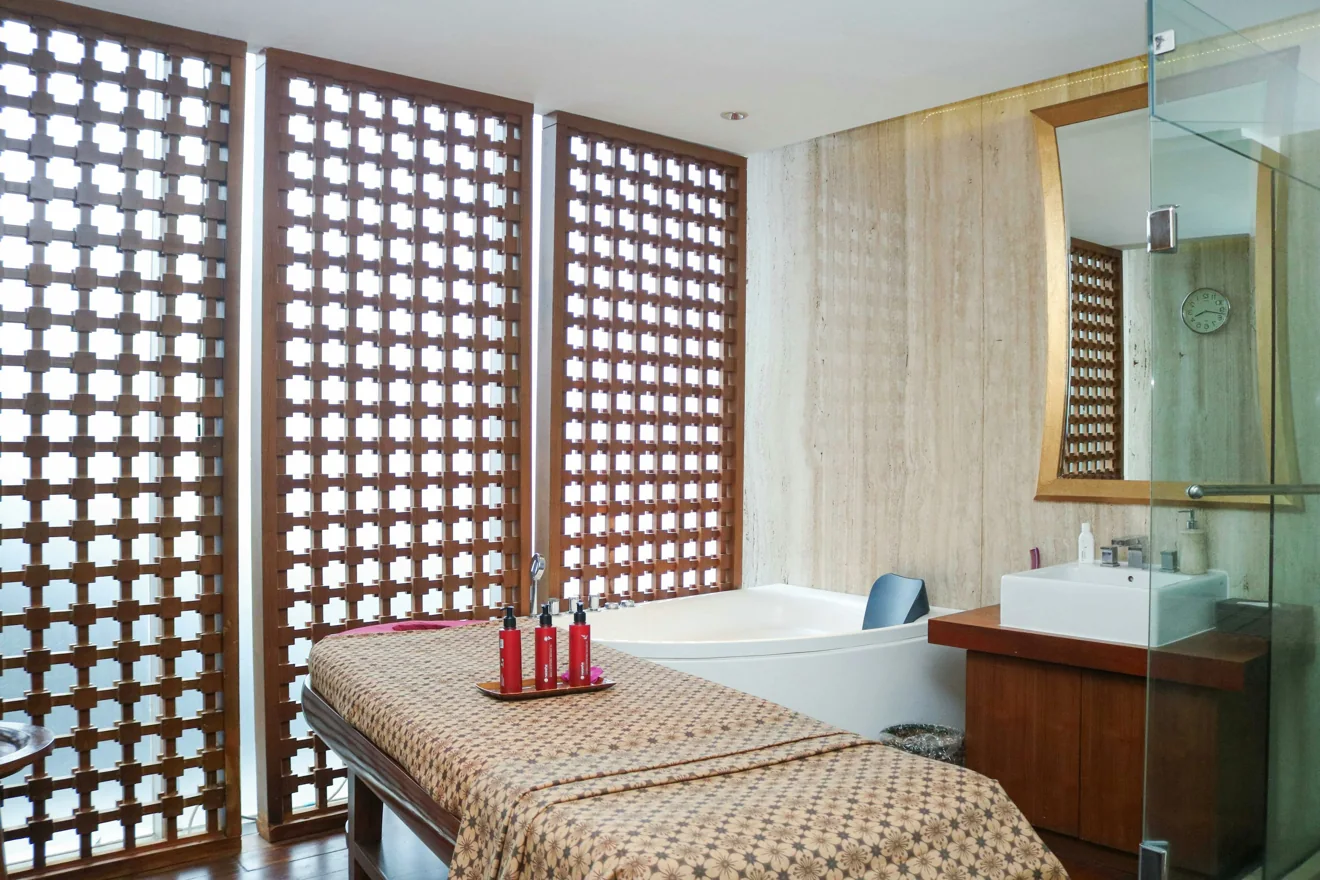
In February, IHG’s regional finance chief, Matt Woollard, explained who paid for Six Senses Rome. The owner secured the site and financed the conversion of a palazzo between the Pantheon and the Trevi Fountain. IHG contributed what the industry calls key money, a payment to the owner as part of the hotel agreement. The money arrived after the doors opened. It helped the owner through the first months of trading. IHG, in turn, expected to collect fees for decades. Two parties could look at the same beautiful building and calculate quite different returns.
That distinction belongs near the front of any proposal for a new hotel spa. The architect can say what fits beneath the bedrooms. The brand can say what it needs to put its name over the door. Someone still has to explain which customers will pay for the extra space, how often they will come and whose accounts will record the result.
What a wellness traveller buys
The Global Wellness Institute’s November 2026 monitor puts a useful number on the ambiguity. It estimates that 83 per cent of wellness trips in 2025 were taken by people travelling primarily for another reason. Their spending includes accommodation, food, local transport and shopping. Imagine a conference delegate who chooses a hotel because she can swim before breakfast. Her taxi fare belongs in the institute’s estimate. The hotel has won a room night. The spa director could go through the books and find no trace of her.
This matters when an owner has competing claims on a renovation budget. A pool that opens at six, a quiet bedroom above the ballroom and a breakfast a runner can eat before a race each serve a guest who cares about wellbeing. Each has a different income statement. The appeal of the treatment room in the investment meeting is that it comes with a price list. Some of the strongest reasons to return to a hotel never appear on a receipt.
When the spa is the reason for the trip
Hyatt offers a case in which committing real capital made commercial sense to the buyer. Its 2017 annual filing recorded $237 million in cash consideration for Miraval. The acquisition included the brand, resorts in Tucson and Austin, and an option on a Massachusetts property. The purchase accounting assigned $173 million to property and equipment and a separate $14 million to management agreement intangibles. Hyatt could take a proposition developed at particular American resorts and offer it elsewhere. An independent hotel building four treatment rooms buys no such right.
In June 2026 Miraval opened on Saudi Arabia’s Shura Island, its first resort outside the United States. Hyatt describes 180 guest rooms, suites and villas, 39 indoor and outdoor treatment rooms, and planners who help guests assemble an itinerary. Calligraphy and kayaking sit alongside spa treatments. The planner is an important part of that investment. A guest with three days on the island can choose activities in advance, and a resort that knows the pattern of demand can decide when it needs a guide, an instructor or a therapist. The opening establishes what Hyatt has put into service. The return on those 39 rooms will take operating results to establish.
A smaller hotel could borrow the planning idea tomorrow morning. Ask arriving guests which activities they hope to book and when. Record the first time requested, the alternative offered and whether the guest accepted it. A diary that records only completed treatments erases the guest who wanted four o’clock and declined ten. A month of those requests can distinguish a shortage of treatment rooms from a shortage of therapists after lunch. Changing the rota is a cheaper experiment than changing the floor plan.
The other use of the floor
The American accounts offer a sobering comparison. Robert Mandelbaum and Andrea Grigg of CBRE examined 297 US hotels that ran their own spas in both 2023 and 2024. In 2024 spa revenue rose 1.4 per cent, labour costs rose 3.9 per cent and departmental profit slipped 0.5 per cent. Leased spas were excluded and the sample averaged 381 guest rooms. A small island resort will have its own wage bill and quite different access to local customers. What the sample supplies is a reason to scrutinise a growing top line.
Consider an illustrative four-room spa expansion. Suppose the owner sets an annual hurdle of $180,000 to cover the added fixed costs and required return on capital. Each additional treatment leaves $75 after the therapist’s variable pay, products, linen and booking costs. The expansion needs 2,400 genuinely additional treatments a year. Over 50 trading weeks that means 48 a week, or two per new room on each of six operating days. Moving a booking from an existing room creates no extra $75. Filling Saturday and leaving Tuesday empty may be enough, but the rota has to show how Saturday could carry the week.
There may be another payer. A group organiser might book 80 rooms because delegates can use the spa. Equally, the group might have chosen the hotel for its meeting space and accepted the spa access thrown in. The two bookings look identical after checkout. A sales director can do better by recording what the buyer asked for before the proposal was priced, and which competing hotel won when the business went elsewhere. A revenue manager can compare room rates, booking conversion and length of stay on similar dates, allowing for suite upgrades, holidays and changes in the mix of guests. Counting every room night sold with a spa package would give the spa credit for business the hotel already had.
The hardest number to put in the proposal is the value of the best alternative use. A quiet meeting room might sell on the very weekdays when treatment demand runs thin. Keeping part of the space unbuilt might preserve the option to expand after two seasons of trading. Before approving the drawings, an owner could ask the spa director and the head of sales to name the next 48 weekly appointments and the room nights they believe depend on them. The answers need not agree. Their disagreement is considerably cheaper to investigate while the walls are still on paper.
| Per available hotel room | Change in 2024 |
|---|---|
| Spa revenue | +1.4% |
| Spa labour costs | +3.9% |
| Total spa department expenses | +2.1% |
| Spa department profit | −0.5% |
Sources
- Global Wellness Economy Monitor 2026, chapter 9 and figure 9.7 · Global Wellness Institute ·
- Capital expenditure and key money, investor discussion transcript · IHG Hotels & Resorts ·
- 2017 Form 10-K, Acquisitions and Dispositions: Miraval purchase price allocation · Hyatt Hotels Corporation, US Securities and Exchange Commission ·
- The Miraval Brand Debuts Globally with Opening of Miraval The Red Sea in Saudi Arabia · Hyatt Hotels Corporation ·
- The Role of Hotel Spa Departments · CBRE Hotels Research ·